Romblon State University (RSU) highlighted its growing role as a partner in advancing science, technology, and innovation for island communities during the 2026 MIMAROPA Regional Science, Technology, and Innovation Week (RSTW) Press Conference held on August 17, 2026, at the RSU Hostel Function Hall.
The press conference brought together representatives from national, local, university, and student media organizations for an exchange with key officials of the Department of Science and Technology (DOST) and RSU.
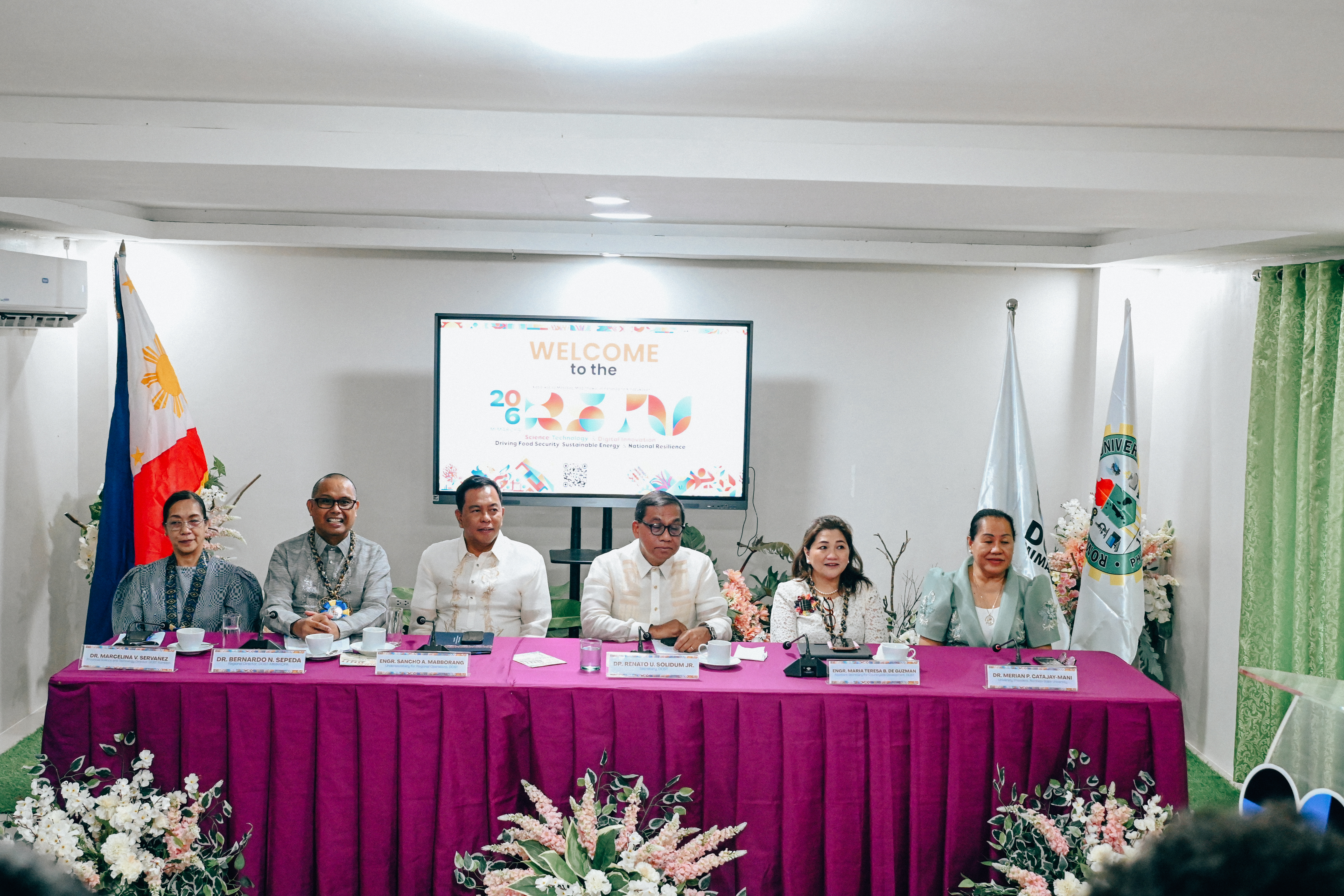
The panel was composed of DOST Secretary Dr. Renato U. Solidum Jr.; DOST Undersecretary for Regional Operations Engr. Sancho A. Mabborang; DOST-MIMAROPA Regional Director Dr. Bernardo N. Sepeda; DOST Assistant Secretary for Countryside Development Engr. Maria Teresa B. De Guzman; DOST-Romblon Provincial Director Dr. Marcelina V. Servañez; and RSU University President Prof. Dr. Merian P. Catajay-Mani.
Opening the discussion, Secretary Solidum underscored the importance of the RSTW in bringing science and technology closer to communities, particularly through initiatives addressing disaster risks and resilience.
“For this Regional Science, Technology, and Innovation Week (RSTW) celebration, we will undertake many disaster-related projects so that we can actually help our fisherfolk, our farmers, and our ordinary citizens all over the provinces of MIMAROPA to be more resilient,” he said.
Undersecretary Mabborang, meanwhile, shared that DOST's engagements in San Agustin, Odiongan, and RSU had already generated requests and proposed initiatives from local stakeholders. He emphasized the agency's continuing efforts to deliver what Secretary Solidum describes as “agham na ramdam.”
The press conference became an opportunity for RSU to articulate the University's role not only as an academic institution but also as a partner and beneficiary in translating DOST-supported science and technology initiatives into meaningful learning, research, and community applications.
President Mani emphasized the University's appreciation for DOST's recognition of RSU as a partner in implementing programs on the ground. “Masaya ang Romblon State University na ina-acknowledge ng DOST na maging partner o kabahagi sa mga programang ini-implement sa ground. Ang RSU ay may human resource na puwedeng gamitin, puwedeng makiisa, at mag-implement ng mga proyektong ito,” she said.
A national media representative directed a question to President Mani regarding the importance of DOST-funded projects to the University community, particularly the studentry and RSU's research thrust, as well as whether the University remains hopeful that the current engagement could contribute to increased funding for RSU.
On the question of additional funding, President Mani acknowledged that increased support remains an aspiration while recognizing that budget utilization follows established processes and systems. She noted that while additional resources are welcomed, the University must continue to work within the appropriate mechanisms governing their utilization.
She further emphasized the tangible value of DOST-funded projects to RSU's students and researchers. According to President Mani, these initiatives provide students with opportunities for hands-on learning and direct exposure to equipment, technologies, and facilities that complement classroom instruction.
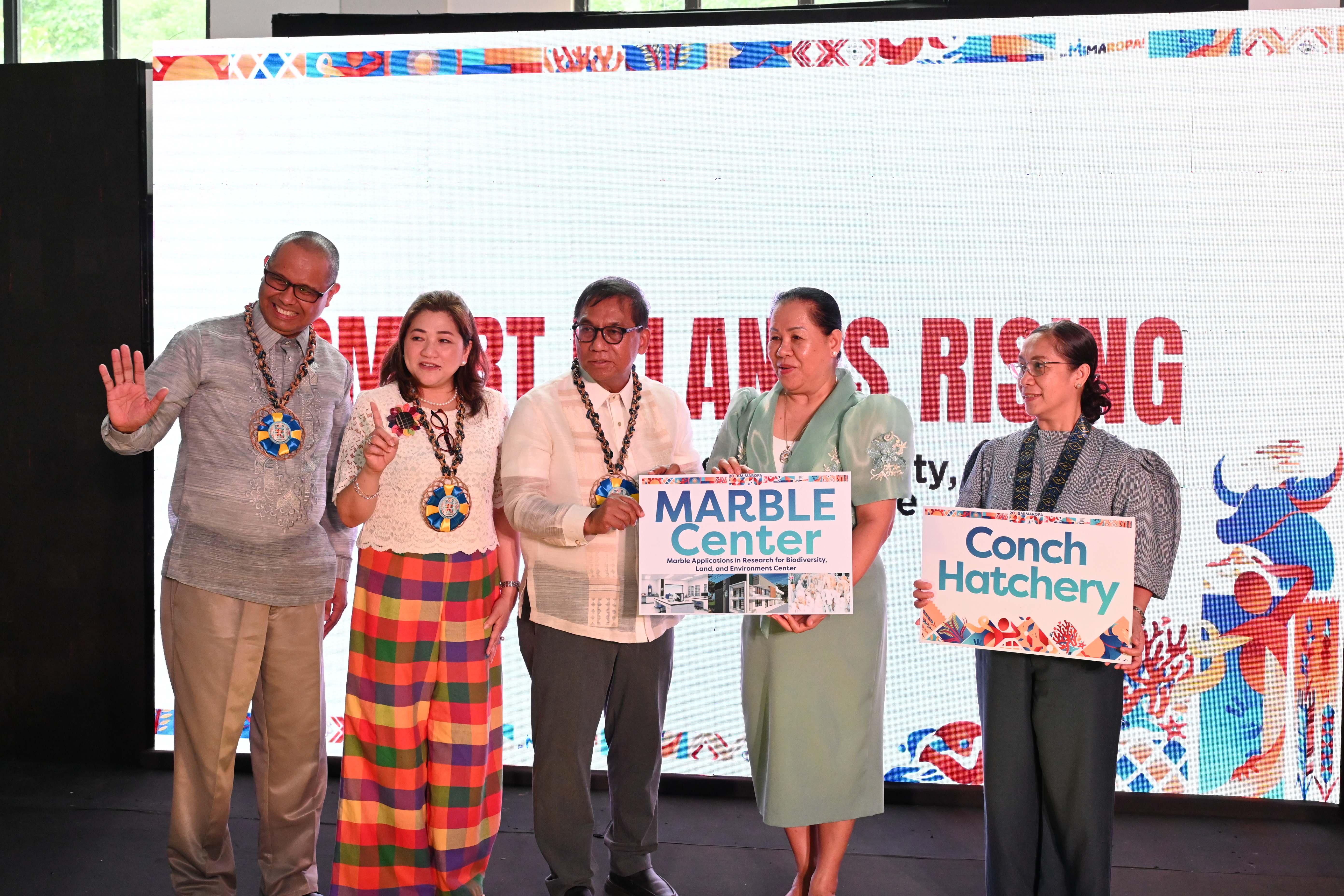
One example she cited was the MARBLE Center at the RSU Romblon Campus. With students gaining direct access to resources and facilities, the Center has also become a laboratory and learning environment for RSU's engineering programs, providing students with practical experiences connected to their field.
Beyond the MARBLE Center, President Mani described DOST-supported facilities and initiatives as “physical playgrounds” for students, where academic knowledge can be experienced through actual applications. These include the food processing center, weaving projects, and native pig project, among other initiatives supported through the University's partnership with DOST.
The discussion also turned toward RSU's continuing journey toward becoming the nation's Center for Archipelagic Intelligence, particularly in the context of developing research and innovation responsive to the realities of island communities.
The RSU Office of Media and Public Affairs raised a question on how DOST and higher education institutions can work together in developing a science, technology, and digital innovation agenda that responds to the unique challenges and opportunities of an archipelagic region.
DOST-MIMAROPA Regional Director Dr. Sepeda encouraged university researchers to scale up and nurture island-reality research, emphasizing the importance of maximizing available DOST grants and opportunities. For universities such as RSU, these mechanisms provide avenues to further develop research that is grounded in the realities of island communities.
Assistant Secretary De Guzman further highlighted DOST's initiatives supporting the utilization of research and development results. She promoted Secretary Solidum's project providing funding for R&D results utilization projects, describing this as an opportunity for higher education institutions to move research outputs toward actual application.
She noted the shift from an earlier emphasis where “palaging research lang talaga ang focus” toward ensuring that research results are ultimately felt in communities. In this regard, she encouraged RSU and other higher education institutions to submit proposals and explore available opportunities for bringing research outputs into wider use.
The succeeding portion of the press conference opened the discussion to other questions from participating media organizations, covering various concerns related to science, technology, innovation, and their application to community development across MIMAROPA.
The press conference concluded with a question from the Odiongan Public Information Office, which asked the panel to share words of encouragement for the youth, particularly young Romblomanons, to keep their spark and contribute to the continued progress of the province.
President Mani emphasized that meaningful contribution does not always depend on one's position, saying, “Regardless of our position, we can still make a meaningful impact in our community by simply doing our part in public service with integrity, purpose, and a genuine heart to serve others. Let us take each day as an opportunity to serve and provide quality and excellent service. At the end of the day, our work is our signature.”
Secretary Solidum, meanwhile, pointed to curiosity as a powerful starting point for young people who want to understand problems and develop solutions. “If you have that curiosity in mind and really want to understand things, it’s very powerful. You want to learn more, and you really want to find out how you can improve things and find solutions,” he said.
Closing the press conference, Dr. Sepeda called on the media to help DOST make science understandable and accessible to the public, stressing that science should not be confined to the academe but should be understood and embraced by everyone.
“Kapag hindi natin naipaunawa ang agham, hindi ito tunay na mararamdaman,” Dr. Sepeda said.
The exchange underscored the broader purpose of the 2026 MIMAROPA RSTW: to make science, technology, and innovation more accessible and relevant to communities. For RSU, the University's participation reflects its continuing role as a research, education, and innovation partner, connecting DOST-supported technologies and programs with students, researchers, communities, and the distinct realities of an archipelagic region.
The panel was composed of DOST Secretary Dr. Renato U. Solidum Jr.; DOST Undersecretary for Regional Operations Engr. Sancho A. Mabborang; DOST-MIMAROPA Regional Director Dr. Bernardo N. Sepeda; DOST Assistant Secretary for Countryside Development Engr. Maria Teresa B. De Guzman; DOST-Romblon Provincial Director Dr. Marcelina V. Servañez; and RSU University President Prof. Dr. Merian P. Catajay-Mani.
Opening the discussion, Secretary Solidum underscored the importance of the RSTW in bringing science and technology closer to communities, particularly through initiatives addressing disaster risks and resilience.
“For this Regional Science, Technology, and Innovation Week (RSTW) celebration, we will undertake many disaster-related projects so that we can actually help our fisherfolk, our farmers, and our ordinary citizens all over the provinces of MIMAROPA to be more resilient,” he said.
Undersecretary Mabborang, meanwhile, shared that DOST's engagements in San Agustin, Odiongan, and RSU had already generated requests and proposed initiatives from local stakeholders. He emphasized the agency's continuing efforts to deliver what Secretary Solidum describes as “agham na ramdam.”
The press conference became an opportunity for RSU to articulate the University's role not only as an academic institution but also as a partner and beneficiary in translating DOST-supported science and technology initiatives into meaningful learning, research, and community applications.
President Mani emphasized the University's appreciation for DOST's recognition of RSU as a partner in implementing programs on the ground. “Masaya ang Romblon State University na ina-acknowledge ng DOST na maging partner o kabahagi sa mga programang ini-implement sa ground. Ang RSU ay may human resource na puwedeng gamitin, puwedeng makiisa, at mag-implement ng mga proyektong ito,” she said.
A national media representative directed a question to President Mani regarding the importance of DOST-funded projects to the University community, particularly the studentry and RSU's research thrust, as well as whether the University remains hopeful that the current engagement could contribute to increased funding for RSU.
On the question of additional funding, President Mani acknowledged that increased support remains an aspiration while recognizing that budget utilization follows established processes and systems. She noted that while additional resources are welcomed, the University must continue to work within the appropriate mechanisms governing their utilization.
She further emphasized the tangible value of DOST-funded projects to RSU's students and researchers. According to President Mani, these initiatives provide students with opportunities for hands-on learning and direct exposure to equipment, technologies, and facilities that complement classroom instruction.
One example she cited was the MARBLE Center at the RSU Romblon Campus. With students gaining direct access to resources and facilities, the Center has also become a laboratory and learning environment for RSU's engineering programs, providing students with practical experiences connected to their field.
Beyond the MARBLE Center, President Mani described DOST-supported facilities and initiatives as “physical playgrounds” for students, where academic knowledge can be experienced through actual applications. These include the food processing center, weaving projects, and native pig project, among other initiatives supported through the University's partnership with DOST.
The discussion also turned toward RSU's continuing journey toward becoming the nation's Center for Archipelagic Intelligence, particularly in the context of developing research and innovation responsive to the realities of island communities.
The RSU Office of Media and Public Affairs raised a question on how DOST and higher education institutions can work together in developing a science, technology, and digital innovation agenda that responds to the unique challenges and opportunities of an archipelagic region.
DOST-MIMAROPA Regional Director Dr. Sepeda encouraged university researchers to scale up and nurture island-reality research, emphasizing the importance of maximizing available DOST grants and opportunities. For universities such as RSU, these mechanisms provide avenues to further develop research that is grounded in the realities of island communities.
Assistant Secretary De Guzman further highlighted DOST's initiatives supporting the utilization of research and development results. She promoted Secretary Solidum's project providing funding for R&D results utilization projects, describing this as an opportunity for higher education institutions to move research outputs toward actual application.
She noted the shift from an earlier emphasis where “palaging research lang talaga ang focus” toward ensuring that research results are ultimately felt in communities. In this regard, she encouraged RSU and other higher education institutions to submit proposals and explore available opportunities for bringing research outputs into wider use.
The succeeding portion of the press conference opened the discussion to other questions from participating media organizations, covering various concerns related to science, technology, innovation, and their application to community development across MIMAROPA.
The press conference concluded with a question from the Odiongan Public Information Office, which asked the panel to share words of encouragement for the youth, particularly young Romblomanons, to keep their spark and contribute to the continued progress of the province.
President Mani emphasized that meaningful contribution does not always depend on one's position, saying, “Regardless of our position, we can still make a meaningful impact in our community by simply doing our part in public service with integrity, purpose, and a genuine heart to serve others. Let us take each day as an opportunity to serve and provide quality and excellent service. At the end of the day, our work is our signature.”
Secretary Solidum, meanwhile, pointed to curiosity as a powerful starting point for young people who want to understand problems and develop solutions. “If you have that curiosity in mind and really want to understand things, it’s very powerful. You want to learn more, and you really want to find out how you can improve things and find solutions,” he said.
Closing the press conference, Dr. Sepeda called on the media to help DOST make science understandable and accessible to the public, stressing that science should not be confined to the academe but should be understood and embraced by everyone.
“Kapag hindi natin naipaunawa ang agham, hindi ito tunay na mararamdaman,” Dr. Sepeda said.
The exchange underscored the broader purpose of the 2026 MIMAROPA RSTW: to make science, technology, and innovation more accessible and relevant to communities. For RSU, the University's participation reflects its continuing role as a research, education, and innovation partner, connecting DOST-supported technologies and programs with students, researchers, communities, and the distinct realities of an archipelagic region.